How to Prepare for Fence Painting & Staining in Cheltenham
Every fence painting & staining project in Cheltenham starts the same way — with thorough, methodical preparation. Here's what's involved and why each step matters for Central Gloucestershire properties.
Anyone hunting for fence painting & staining in Cheltenham should know we work the area weekly; ringed by M5 junctions 10 and 11 with the A40 running east into the Cotswolds. Plenty of nearby fence painting & staining jobs also come from around Cheltenham Promenade. We protect floors, soft furnishings and entryways before a single brush comes out. Quotes itemise every coat and prep stage so you can compare like-for-like. Final stage on every Cheltenham project: snag walk, touch-up tin labelled with paint code, written care guide, and photos for your records. Lighting test boards go up before final colour signoff — north-facing rooms need a different undertone to south-facing ones, and we'll prove it on the wall.
Step-by-Step Preparation
Check fence condition
Inspect for rotten posts, broken panels, loose nails, and moss/algae growth. Repair or replace damaged sections first.
Clean the fence
Brush off loose dirt, moss, and flaking paint. For heavily soiled fences, use a garden sprayer with fence cleaner. Allow to dry 48 hours.
Protect surrounding areas
Mask adjacent walls, patios, and plants. Lay down old sheets or cardboard to catch drips.
Choose your product
Decide between fence stain (shows grain), fence paint (solid colour), or preservative (natural protection). Each has different application methods.
Plan your application method
Brush application gives the best penetration. Spray is faster for large runs but needs thorough masking. Pad applicators work well for flat panels.
Common Mistakes to Avoid
Painting wet or damp fences — treatment can't penetrate wet wood
Applying too much in one coat — causes drips and pools that take days to dry
Not protecting plants — fence paint kills plants it contacts
Using old or congealed product — gives an uneven, patchy finish
Painting in direct sun — causes the finish to dry too fast and look streaky
What We Handle
We handle cleaning, preparation, masking, and application. We use professional spray equipment for large fence runs and brush application for detailed areas.
DIY vs Professional
Fence painting is manageable DIY for a short run. For long boundaries or difficult access, professional spray application is 5x faster and gives an even, professional finish.
Fence Painting & Staining Preparation Notes for Cheltenham
One of the things we've learned working fence painting & staining prep jobs in Cheltenham: Victorian villa double-skin brickwork reacts differently to modern paints than newer-build construction does. We adjust our specification accordingly — often using breathable systems where appropriate.
From Cheltenham Promenade out to the surrounding Central Gloucestershire villages, we see a consistent pattern. Regency stucco crazing on Cheltenham terraces that needs flexible elastomeric coatings is a frequent finding, and we always quote on the basis of fixing the underlying issue rather than painting over it.
Drive five minutes out from Pittville Park and the housing stock changes character noticeably. Closer to the centre we see more Regency stucco rendered onto brick; further out it shifts towards Victorian villa double-skin brickwork. That mix is one of the things that makes fence painting & staining in Cheltenham interesting — no two streets ask for exactly the same specification, and a single quote template would do most properties a disservice.
Specific issues we encounter often in Cheltenham include Regency stucco crazing on Cheltenham terraces that needs flexible elastomeric coatings, magnolia-over-magnolia interiors in 1980s Gloucester estates, and Victorian villa staircase woodwork in Pittville and Tivoli. Each one has its own correct response, and lumping them together under "preparation" doesn't do justice to how much the right approach extends the life of a fence painting & staining finish. Our quotes itemise this work so you can see exactly what's being done and why.
Work near Cheltenham Promenade tends to involve the older end of the local housing stock. Recurring themes here include magnolia-over-magnolia interiors in 1980s Gloucester estates and the careful prep needed before any topcoat goes near Regency stucco rendered onto brick. We've developed a sequence for these properties that addresses the substrate first — fillers, primers, and stabilisers chosen for the specific construction — rather than relying on the paint itself to compensate for poor preparation.
One pattern we see consistently across GL2 and GL4 is Regency stucco crazing on Cheltenham terraces that needs flexible elastomeric coatings. It's not always obvious from the street, but it shows up almost immediately during a proper survey. Treating it correctly takes longer than ignoring it, but the fence painting & staining finish that goes on top will outlast a quick-cover job by years rather than months.
For Cheltenham fence painting & staining customers asking what's typical for the area: jobs around Gloucester Cathedral skew towards heritage colour palettes and breathable products, while modern estates within GL1 are often more about contemporary neutrals on plasterboard and MDF. Both are equally valid — they just need different specifications, and we quote each on its own terms.
Preparation FAQs — Fence Painting & Staining in Cheltenham
Do you repair cracks and holes as part of fence painting & staining?
Yes — our quotes include filling cracks, holes, and imperfections. For extensive plaster damage, we may recommend re-skimming sections for the best result.
Do I need to move furniture before fence painting & staining?
We move and protect furniture as part of our service. For larger items, just clear small personal items. We'll take care of the rest.
What preparation do Regency townhouses need before fence painting & staining?
Regency townhouses in Cheltenham often need specific surface treatment — checking for damp, repairing cracks, and selecting the right primers. We assess all this during our initial visit.
How long does preparation take for fence painting & staining?
Preparation typically takes 30-50% of the total project time. It might seem like a lot, but it's what makes the difference between a finish that lasts 2 years and one that lasts 10.
What happens if you find damp during preparation?
We'll flag any issues immediately and discuss options. Minor damp can often be treated as part of the project. For more serious issues, we'll recommend appropriate treatment before painting.
Should I remove wallpaper before you start?
We can handle wallpaper removal as part of the project. In fact, we prefer to do it ourselves to ensure the surface underneath is properly prepared for a lasting finish.
Do you do commercial fence painting & staining near Cheltenham?
Yes. We regularly take commercial fence painting & staining jobs around Cheltenham Promenade — a key local high street — and can quote inside or outside business hours.
Which local authority covers Cheltenham?
Properties in Cheltenham fall under Cheltenham Borough Council. Note: the Regency town centre is a major conservation area with thousands of listed terraces. We're used to the planning and conservation rules that apply to fence painting & staining work in this area.
Fence Painting & Staining Done Properly in Cheltenham
From preparation to the final finish — we handle every step. Free, no-obligation estimates.
Recent Fence Painting & Staining Work Near Cheltenham
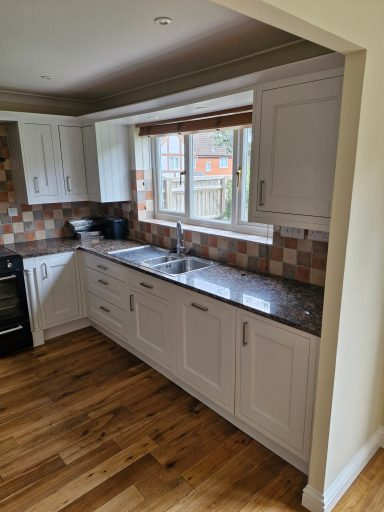
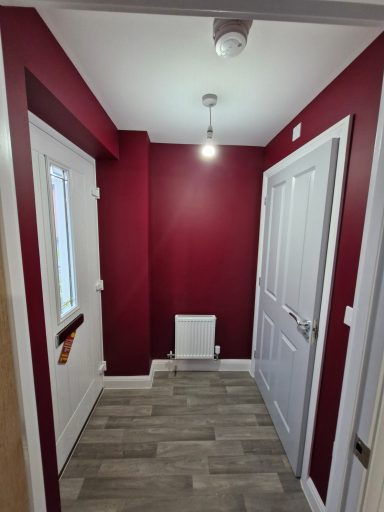
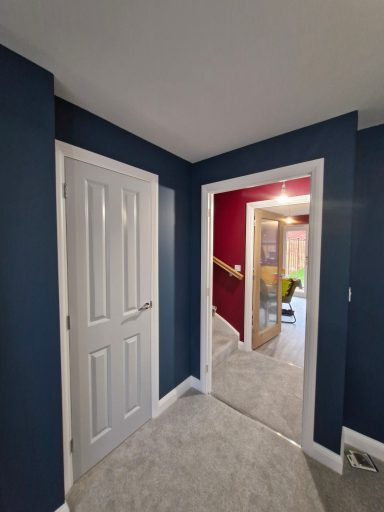
Real projects from our portfolio around Central Gloucestershire.
Two minutes is all it takes — Cheltenham fence painting & staining
Fill in the short form below — rooms, rough size, target month — and we'll come back with a ballpark same-day plus a proper site visit if you'd like one.