How to Prepare for Kitchen Cabinet Painting in Didcot
For converted barns in Didcot, preparation for kitchen cabinet painting is especially important. The right prep work ensures your finish looks great and lasts for years. Here's our professional guide.
Anyone hunting for kitchen cabinet painting in Didcot should know we work the area weekly; Didcot sits between the A34 and the A4130 with a major Great Western Railway interchange. Plenty of nearby kitchen cabinet painting jobs also come from around Harwell Campus. Snag-free hand-back is the bar: we walk the job with you before we leave. One trusted lead decorator on site each day — no rotating cast of subbies. Final stage on every Didcot project: snag walk, touch-up tin labelled with paint code, written care guide, and photos for your records. Lighting test boards go up before final colour signoff — north-facing rooms need a different undertone to south-facing ones, and we'll prove it on the wall.
Step-by-Step Preparation
Remove doors and hardware
Label every door and drawer with masking tape numbers. Remove handles, hinges, and catches. Store hardware in labelled bags so everything goes back in the right place.
Degrease thoroughly
Kitchen cabinets accumulate years of cooking grease. Clean every surface with specialist kitchen degreaser — not just sugar soap. This is the most important preparation step.
Sand all surfaces
Sand with 120-grit to create a key for primer. Sand again with 240-grit for a smooth base. Pay special attention to edges and profile details on panel doors.
Apply specialist primer
Use a bonding primer designed for kitchen cabinets (not standard primer). This is what prevents peeling — it's the critical difference between a lasting finish and one that chips.
Plan your workspace
Set up a clean, dust-free area for painting doors. A garage or spare room works well. Support doors on painting pyramids so you can paint both sides.
Common Mistakes to Avoid
Not degreasing properly — primer and paint can't bond to greasy surfaces
Using standard wall primer — it's not tough enough for kitchen cabinets
Painting in a dusty environment — dust settles in wet paint creating a rough finish
Applying paint too thickly — causing drips and an orange-peel texture
Rehinging doors before paint fully cures — causing sticking and paint damage
What We Handle
We handle the complete process — door removal, degreasing, sanding, specialist primer, multiple coats, and rehinging. Your kitchen is back to full use as quickly as possible.
DIY vs Professional
DIY cabinet painting can work but demands specialist products, patience, and a dust-free space. The difference between DIY and professional is visible in the finish quality and longevity.
Kitchen Cabinet Painting Preparation Notes for Didcot
Properties around the Chilterns typically feature traditional UK construction methods typical of Didcot. Our kitchen cabinet painting prep approach for these homes accounts for those specifics so the finish bonds properly and lasts.
From the Chilterns out to the surrounding South Oxfordshire villages, we see a consistent pattern. Chilterns flint-and-brick cottage exterior care is a frequent finding, and we always quote on the basis of fixing the underlying issue rather than painting over it.
For Didcot kitchen cabinet painting customers asking what's typical for the area: jobs around Wallingford bridge skew towards heritage colour palettes and breathable products, while modern estates within OX14 are often more about contemporary neutrals on plasterboard and MDF. Both are equally valid — they just need different specifications, and we quote each on its own terms.
One pattern we see consistently across OX44 and RG9 is Chilterns flint-and-brick cottage exterior care. It's not always obvious from the street, but it shows up almost immediately during a proper survey. Treating it correctly takes longer than ignoring it, but the kitchen cabinet painting finish that goes on top will outlast a quick-cover job by years rather than months.
Work near the Chilterns tends to involve the older end of the local housing stock. Recurring themes here include Thames-side timber window restoration in Henley and Wallingford and the careful prep needed before any topcoat goes near traditional UK construction methods typical of Didcot. We've developed a sequence for these properties that addresses the substrate first — fillers, primers, and stabilisers chosen for the specific construction — rather than relying on the paint itself to compensate for poor preparation.
Specific issues we encounter often in Didcot include Thames-side timber window restoration in Henley and Wallingford, Thames-side timber window restoration in Henley and Wallingford, and Thames-side timber window restoration in Henley and Wallingford. Each one has its own correct response, and lumping them together under "preparation" doesn't do justice to how much the right approach extends the life of a kitchen cabinet painting finish. Our quotes itemise this work so you can see exactly what's being done and why.
Local material reality matters: traditional UK construction methods typical of Didcot dominates parts of Didcot that newer build does not, and the local climate adds its own demands. Oxfordshire sees relatively dry winters compared to the south-west but properties on the Thames floodplain can suffer rising damp. Combined, this means our kitchen cabinet painting specifications for properties around the Thames at Henley will often differ noticeably from those a few postcodes away — and rightly so, given how differently those properties behave over a ten-year horizon.
Preparation FAQs — Kitchen Cabinet Painting in Didcot
How should I prepare my Didcot home for kitchen cabinet painting?
Remove or cover valuables, clear surfaces near walls, and ensure access to the rooms being worked on. We handle all surface preparation — filling, sanding, priming, and protection of fixtures.
Do you repair cracks and holes as part of kitchen cabinet painting?
Yes — our quotes include filling cracks, holes, and imperfections. For extensive plaster damage, we may recommend re-skimming sections for the best result.
What happens if you find damp during preparation?
We'll flag any issues immediately and discuss options. Minor damp can often be treated as part of the project. For more serious issues, we'll recommend appropriate treatment before painting.
Should I remove wallpaper before you start?
We can handle wallpaper removal as part of the project. In fact, we prefer to do it ourselves to ensure the surface underneath is properly prepared for a lasting finish.
How long does preparation take for kitchen cabinet painting?
Preparation typically takes 30-50% of the total project time. It might seem like a lot, but it's what makes the difference between a finish that lasts 2 years and one that lasts 10.
Do I need to move furniture before kitchen cabinet painting?
We move and protect furniture as part of our service. For larger items, just clear small personal items. We'll take care of the rest.
Do you cover the areas around Didcot?
Yes — It sits between Wantage (about 9 miles W), Oxford (about 12 miles N) and Abingdon (about 7 miles N). and our normal kitchen cabinet painting radius extends right across Oxfordshire. No call-out fee for sites in this radius.
Do you do commercial kitchen cabinet painting near Didcot?
Yes. We regularly take commercial kitchen cabinet painting jobs around Harwell Campus — a key local business park — and can quote inside or outside business hours.
Kitchen Cabinet Painting Done Properly in Didcot
From preparation to the final finish — we handle every step. Free, no-obligation estimates.
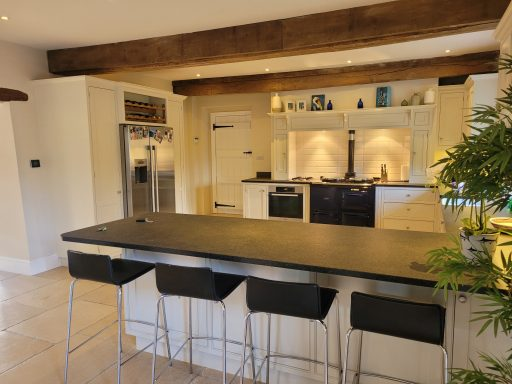
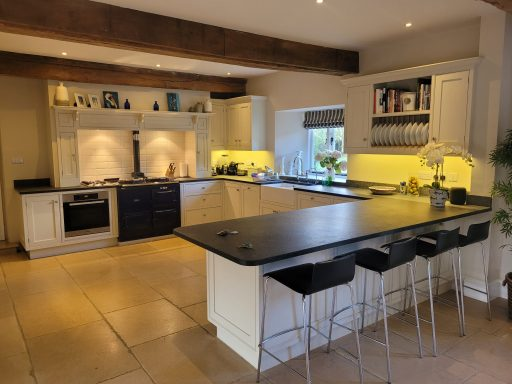
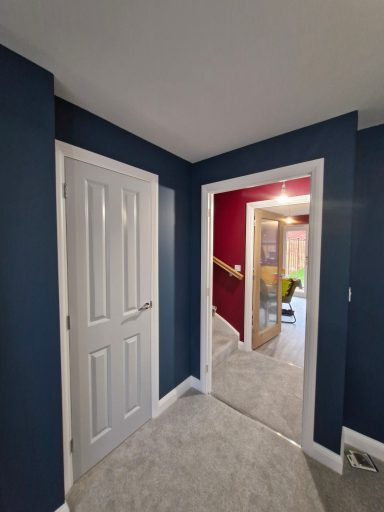
Recent Kitchen Cabinet Painting Work Near Didcot
Real projects from our portfolio around South Oxfordshire.
Local kitchen cabinet painting in Didcot that actually turns up
If you've been let down before, we get it. Every Didcot job has a confirmed start date, daily updates from Gareth, and a tidy hand-back at the end. Wantage (9 mi W) customers come back to us repeatedly for this reason.