Door & Window Painting for Listed Buildings in Thornbury
If you own a listed buildings in Thornbury, you know that standard decorating approaches don't always work. Our specialist door & window painting service addresses the unique challenges these properties present.
Quoting door & window painting in Thornbury starts with the route in: around M5 J14 with the A38 north–south corridor. From there it's measure-up, written spec, fixed price. We regularly travel to Yate (7 mi S) and Bath (14 mi S) for similar jobs. Premium trade paints (Mylands, F&B, Tikkurila where it makes sense) — not contractor white. Daily clean-down at end of shift — no piles of dust sheets left in your hallway. Typical kit on a Thornbury job: Mirka Deros sander with HEPA extraction, Festool dust track, Wagner sprayer for cabinets, brush-and-roller finish for walls. Final stage on every Thornbury project: snag walk, touch-up tin labelled with paint code, written care guide, and photos for your records.
Listed Buildings — Decorating Challenges
Listed building consent required for many external changes
Restrictions on paint colours, especially for exteriors
Use of traditional materials — lime plaster, limewash, linseed putty
Conservation officer approval for any work affecting character
Original features that must be preserved, not modernised
Finding and using historically appropriate paint formulations
The local building materials in South Gloucestershire mean listed buildings may need breathable paints and lime-compatible products rather than standard modern finishes.
Listed Buildings in South Gloucestershire may be in conservation areas, which can restrict colour choices for exterior decoration. We can advise on compliant heritage palettes.
How We Handle Door & Window Painting on Listed Buildings
Traditional limewash preparation and application
Linseed oil paint for external woodwork (the traditional choice)
Heritage paint ranges with historically accurate colour matching
Lime plaster repair using traditional methods and materials
Documentation and photography for conservation records
Door & Window Painting for Listed Buildings in Thornbury — Local Context
Local context matters: the Severn estuary's prevailing south-westerlies push rain hard against exposed south and west elevations. For Thornbury door & window painting for listed buildings jobs — particularly those involving Bristol-edge new-build mist-coat and finish painting — that affects when we work, what products we use, and how we sequence the prep.
Within the SN1 postcode area, the projects we quote most often involve Bristol-edge new-build mist-coat and finish painting. the Severn estuary's prevailing south-westerlies push rain hard against exposed south and west elevations, which directly informs the products we recommend for Thornbury door & window painting for listed buildings work.
Drive five minutes out from the centre of Thornbury and the housing stock changes character noticeably. Closer to the centre we see more traditional UK construction methods typical of Thornbury; further out it shifts towards traditional UK construction methods typical of Thornbury. That mix is one of the things that makes door & window painting for listed buildings in Thornbury interesting — no two streets ask for exactly the same specification, and a single quote template would do most properties a disservice.
Within SN1 alone we've handled everything from Stroud-fringe stone cottage renovation work through to Bristol-edge new-build mist-coat and finish painting, and the postcode boundary running through Thornbury means properties on the SN1 side often present slightly different issues again. Most door & window painting for listed buildings jobs in the area touch on at least one of these patterns, which is why we always survey thoroughly before quoting — generic per-room pricing rarely matches what a Thornbury property actually needs.
Local material reality matters: traditional UK construction methods typical of Thornbury dominates parts of Thornbury that newer build does not, and the local climate adds its own demands. the Severn estuary's prevailing south-westerlies push rain hard against exposed south and west elevations. Combined, this means our door & window painting for listed buildings specifications for properties around the centre of Thornbury will often differ noticeably from those a few postcodes away — and rightly so, given how differently those properties behave over a ten-year horizon.
Specific issues we encounter often in Thornbury include Stroud-fringe stone cottage renovation work, Stroud-fringe stone cottage renovation work, and Stroud-fringe stone cottage renovation work. Each one has its own correct response, and lumping them together under "preparation" doesn't do justice to how much the right approach extends the life of a door & window painting for listed buildings finish. Our quotes itemise this work so you can see exactly what's being done and why.
For Thornbury door & window painting for listed buildings customers asking what's typical for the area: jobs around the centre of Thornbury skew towards heritage colour palettes and breathable products, while modern estates within SN1 are often more about contemporary neutrals on plasterboard and MDF. Both are equally valid — they just need different specifications, and we quote each on its own terms.
Listed Buildings Door & Window Painting FAQs — Thornbury
What preparation do listed buildings need before door & window painting?
Listed Buildings often require more extensive preparation than modern properties — lime plaster repair, damp treatment, careful sanding of period features. We never skip these essential steps.
Have you worked on listed buildings before?
Yes, extensively. We've worked on Grade I and Grade II listed properties across the Cotswolds, Wiltshire, and Oxfordshire. We understand the requirements and work sensitively.
What makes door & window painting different on listed buildings?
Listed Buildings have specific requirements — from surface types and preparation methods to product compatibility. Getting these right is what delivers a finish that lasts years rather than months.
What paints can I use on a listed building?
The key requirement is breathability. Limewash, mineral paints, claypaint, and linseed paints are all appropriate. Modern plastic-based paints should be avoided on original surfaces.
How long does door & window painting last on listed buildings?
With the right preparation and products, our door & window painting on listed buildings typically lasts 8-12 years for interiors and 5-8 years for exteriors, depending on exposure.
Can you match existing colours on my listed buildings?
Yes — we can colour-match to any existing finish. For listed buildings, we often recommend heritage paint ranges that are designed for these property types.
How much does door & window painting cost for listed buildings in Thornbury?
Costs depend on the condition and size of your property. Listed Buildings often require more specialist preparation, which can affect pricing. Contact us for a free, detailed quote.
How quickly can you reach Thornbury from Swindon?
around M5 J14 with the A38 north–south corridor — so our team usually reaches Thornbury comfortably for a 7:30am start and we don't pad the quote for travel.
Do you cover the areas around Thornbury?
Yes — It sits between Thornbury (about 5 miles S), Yate (about 7 miles S) and Bath (about 14 miles S). and our normal door & window painting radius extends right across South Gloucestershire. No call-out fee for sites in this radius.
Door & Window Painting for Listed Buildings Nearby
Door & Window Painting for Your Listed Buildings
Specialist door & window painting for listed buildings in Thornbury. Free quotes from 10/10 rated experts.
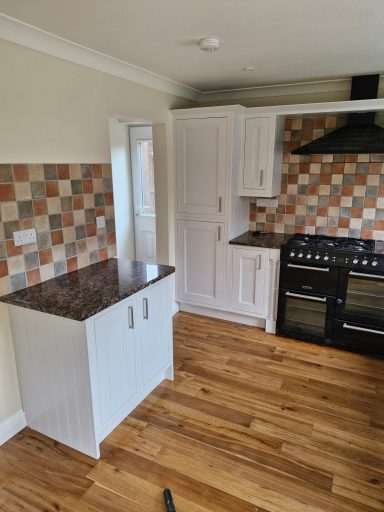
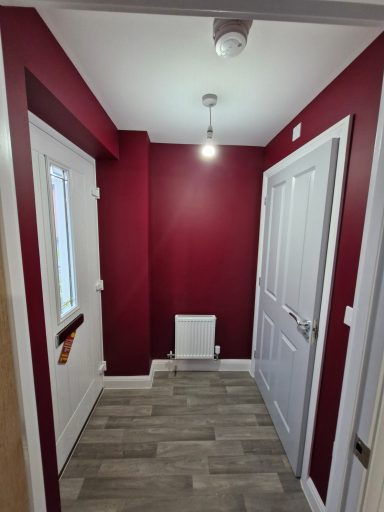
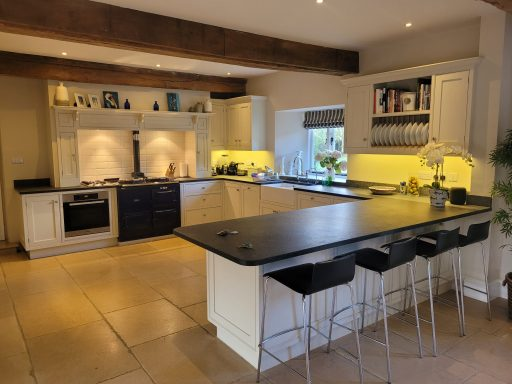
Recent Door & Window Painting Work on Listed Buildings Near Thornbury
A snapshot of real projects from our South Gloucestershire portfolio.
Get a clear door & window painting quote for Thornbury — no surprises
Our Thornbury quotes spell out prep, materials, coats and timeline so you can compare like-for-like. If you've had another quote, we're happy to walk through the differences.