Wooden Floor Sanding & Sealing for Listed Buildings in Stroud
If you own a listed buildings in Stroud, you know that standard decorating approaches don't always work. Our specialist wooden floor sanding & sealing service addresses the unique challenges these properties present.
Quoting wooden floor sanding & sealing in Stroud starts with the route in: the A46 runs north–south through Stroud, with the A419 linking east to Cirencester and M5 J13. From there it's measure-up, written spec, fixed price. We regularly travel to Cirencester (14 mi E) and Nailsworth (4 mi S) for similar jobs. Premium trade paints (Mylands, F&B, Tikkurila where it makes sense) — not contractor white. Daily clean-down at end of shift — no piles of dust sheets left in your hallway. Typical kit on a Stroud job: Mirka Deros sander with HEPA extraction, Festool dust track, Wagner sprayer for cabinets, brush-and-roller finish for walls. Final stage on every Stroud project: snag walk, touch-up tin labelled with paint code, written care guide, and photos for your records.
Listed Buildings — Decorating Challenges
Listed building consent required for many external changes
Restrictions on paint colours, especially for exteriors
Use of traditional materials — lime plaster, limewash, linseed putty
Conservation officer approval for any work affecting character
Original features that must be preserved, not modernised
Finding and using historically appropriate paint formulations
The Gloucestershire climate exposes listed buildings to specific weathering patterns. Exterior finishes need to be chosen for durability against local conditions.
Listed Buildings in South Gloucestershire may be in conservation areas, which can restrict colour choices for exterior decoration. We can advise on compliant heritage palettes.
How We Handle Wooden Floor Sanding & Sealing on Listed Buildings
Traditional limewash preparation and application
Linseed oil paint for external woodwork (the traditional choice)
Heritage paint ranges with historically accurate colour matching
Lime plaster repair using traditional methods and materials
Documentation and photography for conservation records
Wooden Floor Sanding & Sealing for Listed Buildings in Stroud — Local Context
Homeowners near the centre of Stroud often ask about Bristol-edge new-build mist-coat and finish painting. We handle this regularly — traditional UK construction methods typical of Stroud responds well to a careful prep sequence followed by the right specification of paint or coating.
Travelling out from the centre of Stroud, the housing stock changes quickly. Within a few minutes' drive we'll see traditional UK construction methods typical of Stroud sitting next to much newer properties — so every wooden floor sanding & sealing for listed buildings quote we provide in Stroud is tailored to the specific property in front of us.
Drive five minutes out from the centre of Stroud and the housing stock changes character noticeably. Closer to the centre we see more traditional UK construction methods typical of Stroud; further out it shifts towards traditional UK construction methods typical of Stroud. That mix is one of the things that makes wooden floor sanding & sealing for listed buildings in Stroud interesting — no two streets ask for exactly the same specification, and a single quote template would do most properties a disservice.
the Severn Vale brings persistent westerly weather and high humidity, while Cotswold edge properties face exposed elevations. For Stroud wooden floor sanding & sealing for listed buildings customers that has practical consequences: the timing window for exterior work is tighter than people often assume, and interior rooms on north-facing elevations within the SN1 and SN1 areas are noticeably more prone to condensation. We factor both into the products and additives we recommend during the quote stage.
Work near the centre of Stroud tends to involve the older end of the local housing stock. Recurring themes here include Stroud-fringe stone cottage renovation work and the careful prep needed before any topcoat goes near traditional UK construction methods typical of Stroud. We've developed a sequence for these properties that addresses the substrate first — fillers, primers, and stabilisers chosen for the specific construction — rather than relying on the paint itself to compensate for poor preparation.
One pattern we see consistently across SN1 and SN1 is Bristol-edge new-build mist-coat and finish painting. It's not always obvious from the street, but it shows up almost immediately during a proper survey. Treating it correctly takes longer than ignoring it, but the wooden floor sanding & sealing for listed buildings finish that goes on top will outlast a quick-cover job by years rather than months.
For Stroud wooden floor sanding & sealing for listed buildings customers asking what's typical for the area: jobs around the centre of Stroud skew towards heritage colour palettes and breathable products, while modern estates within SN1 are often more about contemporary neutrals on plasterboard and MDF. Both are equally valid — they just need different specifications, and we quote each on its own terms.
Listed Buildings Wooden Floor Sanding & Sealing FAQs — Stroud
Are you experienced with listed or period listed buildings?
Yes — we understand conservation requirements, breathable paint systems, and heritage colour palettes. We work sympathetically with period features to enhance rather than hide them.
Do you specialise in listed buildings in Stroud?
Yes — we have extensive experience with listed buildings across South Gloucestershire. We understand the specific challenges and use the right products and techniques for lasting results.
Do I need consent to paint a listed building?
Internal painting usually doesn't require consent unless you're changing the character of listed features. External colour changes often do. We can advise on what needs approval.
How long does wooden floor sanding & sealing last on listed buildings?
With the right preparation and products, our wooden floor sanding & sealing on listed buildings typically lasts 8-12 years for interiors and 5-8 years for exteriors, depending on exposure.
Have you worked on listed buildings before?
Yes, extensively. We've worked on Grade I and Grade II listed properties across the Cotswolds, Wiltshire, and Oxfordshire. We understand the requirements and work sensitively.
Do listed buildings need special paint products?
Often yes — listed buildings may need breathable paints, specialist primers, or heritage-grade products. We select the right system for your property's construction and condition.
How much does wooden floor sanding & sealing cost for listed buildings in Stroud?
Costs depend on the condition and size of your property. Listed Buildings often require more specialist preparation, which can affect pricing. Contact us for a free, detailed quote.
How quickly can you reach Stroud from Swindon?
the A46 runs north–south through Stroud, with the A419 linking east to Cirencester and M5 J13 — so our team usually reaches Stroud comfortably for a 7:30am start and we don't pad the quote for travel.
Do you cover the areas around Stroud?
Yes — It sits between Stonehouse (about 3 miles W), Nailsworth (about 4 miles S) and Cirencester (about 14 miles E). and our normal wooden floor sanding & sealing radius extends right across Gloucestershire. No call-out fee for sites in this radius.
Wooden Floor Sanding & Sealing for Listed Buildings Nearby
Wooden Floor Sanding & Sealing for Your Listed Buildings
Specialist wooden floor sanding & sealing for listed buildings in Stroud. Free quotes from 10/10 rated experts.
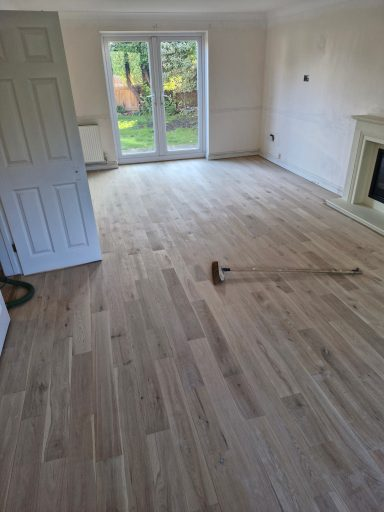
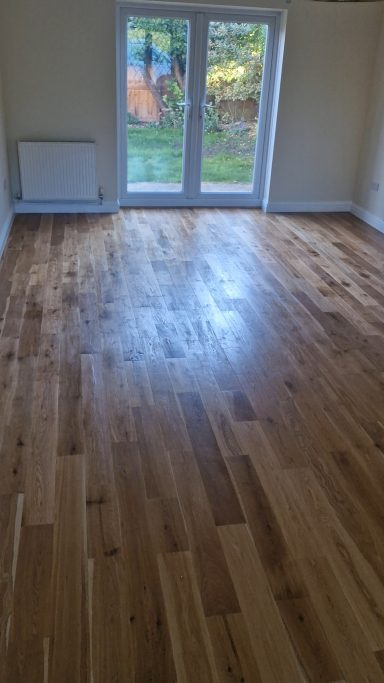
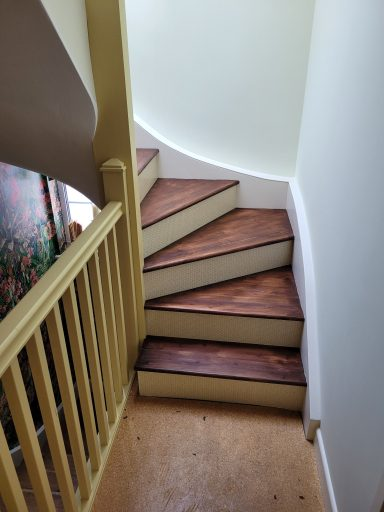
Recent Wooden Floor Sanding & Sealing Work on Listed Buildings Near Stroud
A snapshot of real projects from our South Gloucestershire portfolio.
Why Stroud homeowners book us for wooden floor sanding & sealing
46+ verified Checkatrade reviews at 10/10, dustless sanding kit, premium trade paints, fully insured at height. The bit customers comment on most: the prep we do before any paint goes on.