Interior Painting for Listed Buildings in Banbury
Decorating listed buildings in Banbury is a speciality of ours. We understand the specific requirements — from surface preparation to finish selection — that make the difference between a good result and a lasting one.
For interior painting around Banbury, we treat travel as part of the spec: M40 J11 is on the town's edge, and our diary already covers nearby work. We regularly travel to Brackley (9 mi SE) and Bicester (14 mi S) for similar jobs. Quotes itemise every coat and prep stage so you can compare like-for-like. We protect floors, soft furnishings and entryways before a single brush comes out. Lighting test boards go up before final colour signoff — north-facing rooms need a different undertone to south-facing ones, and we'll prove it on the wall. Final stage on every Banbury project: snag walk, touch-up tin labelled with paint code, written care guide, and photos for your records.
Listed Buildings — Decorating Challenges
Listed building consent required for many external changes
Restrictions on paint colours, especially for exteriors
Use of traditional materials — lime plaster, limewash, linseed putty
Conservation officer approval for any work affecting character
Original features that must be preserved, not modernised
Finding and using historically appropriate paint formulations
Listed Buildings in Banbury frequently have original timber sash windows that need careful preparation and specialist painting techniques to maintain their character and operation.
The Oxfordshire climate exposes listed buildings to specific weathering patterns. Exterior finishes need to be chosen for durability against local conditions.
How We Handle Interior Painting on Listed Buildings
Traditional limewash preparation and application
Linseed oil paint for external woodwork (the traditional choice)
Heritage paint ranges with historically accurate colour matching
Lime plaster repair using traditional methods and materials
Documentation and photography for conservation records
Interior Painting for Listed Buildings in Banbury — Local Context
Postcodes OX15, OX16, OX17 cover most of where we operate around Banbury. The combination of traditional UK construction methods typical of Banbury and the local climate means thatch-line staining on cottages around Adderbury and Bloxham is one of the most common starting points for our interior painting for listed buildings customers here.
Banbury sits within OX15, OX16, OX17, and Oxfordshire sees relatively dry winters compared to the south-west but properties on the Thames floodplain can suffer rising damp. That climate is the main reason we always specify the right primer system here — particularly on jobs that involve thatch-line staining on cottages around Adderbury and Bloxham.
One pattern we see consistently across OX16 and OX15 is thatch-line staining on cottages around Adderbury and Bloxham. It's not always obvious from the street, but it shows up almost immediately during a proper survey. Treating it correctly takes longer than ignoring it, but the interior painting for listed buildings finish that goes on top will outlast a quick-cover job by years rather than months.
Work near the Cherwell valley tends to involve the older end of the local housing stock. Recurring themes here include ironstone pointing repair before exterior painting in Banbury villages and the careful prep needed before any topcoat goes near traditional UK construction methods typical of Banbury. We've developed a sequence for these properties that addresses the substrate first — fillers, primers, and stabilisers chosen for the specific construction — rather than relying on the paint itself to compensate for poor preparation.
Specific issues we encounter often in Banbury include ironstone pointing repair before exterior painting in Banbury villages, ironstone pointing repair before exterior painting in Banbury villages, and ironstone pointing repair before exterior painting in Banbury villages. Each one has its own correct response, and lumping them together under "preparation" doesn't do justice to how much the right approach extends the life of an interior painting for listed buildings finish. Our quotes itemise this work so you can see exactly what's being done and why.
Local material reality matters: traditional UK construction methods typical of Banbury dominates parts of Banbury that newer build does not, and the local climate adds its own demands. Oxfordshire sees relatively dry winters compared to the south-west but properties on the Thames floodplain can suffer rising damp. Combined, this means our interior painting for listed buildings specifications for properties around Banbury Cross will often differ noticeably from those a few postcodes away — and rightly so, given how differently those properties behave over a ten-year horizon.
Within OX15 alone we've handled everything from ironstone pointing repair before exterior painting in Banbury villages through to thatch-line staining on cottages around Adderbury and Bloxham, and the postcode boundary running through Banbury means properties on the OX16 side often present slightly different issues again. Most interior painting for listed buildings jobs in the area touch on at least one of these patterns, which is why we always survey thoroughly before quoting — generic per-room pricing rarely matches what a Banbury property actually needs.
Listed Buildings Interior Painting FAQs — Banbury
Are you experienced with listed or period listed buildings?
Yes — we understand conservation requirements, breathable paint systems, and heritage colour palettes. We work sympathetically with period features to enhance rather than hide them.
Have you worked on listed buildings before?
Yes, extensively. We've worked on Grade I and Grade II listed properties across the Cotswolds, Wiltshire, and Oxfordshire. We understand the requirements and work sensitively.
What makes interior painting different on listed buildings?
Listed Buildings have specific requirements — from surface types and preparation methods to product compatibility. Getting these right is what delivers a finish that lasts years rather than months.
What paints can I use on a listed building?
The key requirement is breathability. Limewash, mineral paints, claypaint, and linseed paints are all appropriate. Modern plastic-based paints should be avoided on original surfaces.
How long does interior painting last on listed buildings?
With the right preparation and products, our interior painting on listed buildings typically lasts 8-12 years for interiors and 5-8 years for exteriors, depending on exposure.
Do listed buildings need special paint products?
Often yes — listed buildings may need breathable paints, specialist primers, or heritage-grade products. We select the right system for your property's construction and condition.
Can you show me examples of interior painting on listed buildings near Banbury?
Yes — we have a portfolio of completed projects on listed buildings across North Oxfordshire. Contact us and we'll share examples relevant to your property.
How quickly can you reach Banbury from Swindon?
M40 J11 is on the town's edge — so our team usually reaches Banbury comfortably for a 7:30am start and we don't pad the quote for travel.
Which local authority covers Banbury?
Properties in Banbury fall under Cherwell District Council. We're used to the planning and conservation rules that apply to interior painting work in this area.
Interior Painting for Listed Buildings Nearby
Listed Buildings Deserve Expert Interior Painting
Don't trust your listed buildings to a generalist. Our specialist knowledge delivers superior results in Banbury.
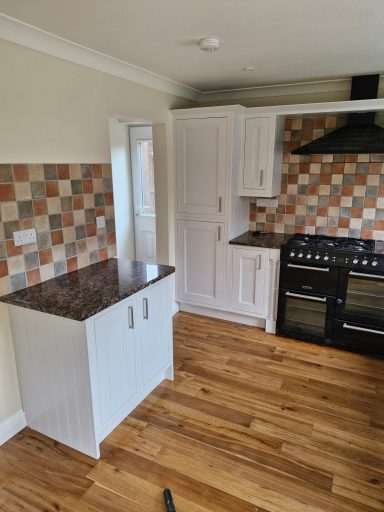
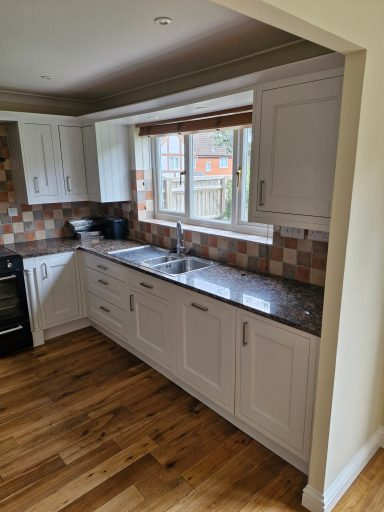
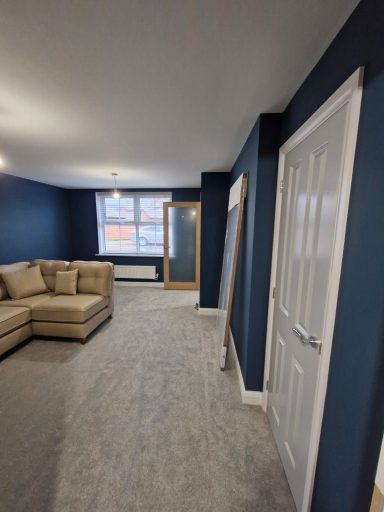
Recent Interior Painting Work on Listed Buildings Near Banbury
A snapshot of real projects from our North Oxfordshire portfolio.
Pencil in your Banbury interior painting dates
Tell us roughly when you want the work done and we'll hold a provisional slot for a week while you decide. No deposit, no commitment, no chasing emails.