Hallway Colour Ideas in Bath
Hallways often have no window at all, or one small pane of glass, so they are lit by borrowed light from the rooms off them.
Bath's UNESCO-protected Georgian stone-fronted terraces have some of the strictest colour and finish conventions in England — the wrong front-door colour is genuinely a planning issue in the World Heritage Site.
Finish, prep and the practical bits
Two coats of scrubbable matt emulsion above the dado, eggshell below (dado, skirtings, spindles). For period properties, paint the staircase spindles the same colour as the walls — it makes the space feel taller.
Finish. Scuff-resistant washable matt on walls and a hard-wearing eggshell on the stair strings and skirtings.
Cabinetry and joinery is finished at around 30 percent sheen: durable enough to wipe, forgiving enough to touch in without a full respray.
Paint the underside of the stairs — the exposed timber under the treads — in the same wall colour. It unifies the hallway visually and hides the awkward joinery detail that dates most houses.
Slaked Lime Mid walls with Setting Plaster below the dado; or Stiffkey Blue full-height with warm brass runners on the staircase.
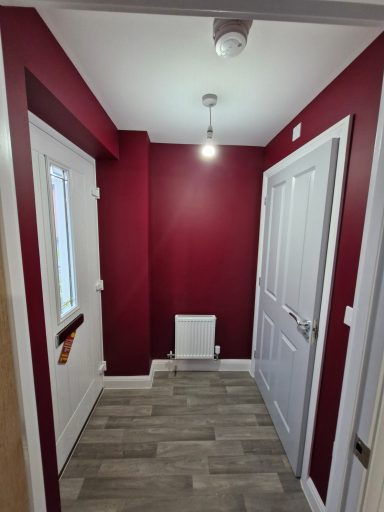
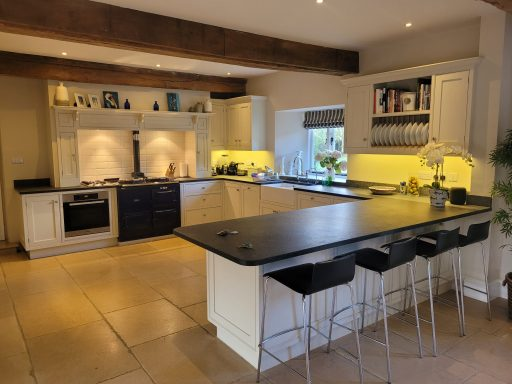
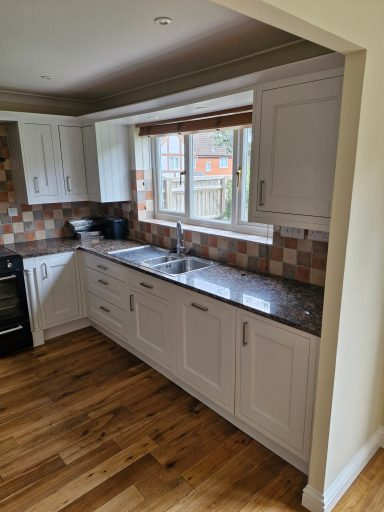
What makes this room different from every other room
Before any colour name comes up, one thing decides most of it. Hallways often have no window at all, or one small pane of glass, so they are lit by borrowed light from the rooms off them.
Because the space is transitional, the colour needs to sit comfortably beside every room that opens off it. A hallway colour is chosen against doorways, not in isolation. Get that right and the specific colour name matters far less than people expect.
Brilliant white in a dark hall does not brighten it, it goes grey. A warm off-white or a deliberately deeper tone almost always looks better. Agents need a scheme that is defensible to the landlord and neutral enough not to put off applicants. Two or three house-standard colours across a portfolio beats a different palette in every property.
Circus and Royal Crescent addresses fall under listed-building rules; Bathwick and Weston Victorian terraces have more flexibility; Larkhall and Combe Down 1930s stock takes modern colour schemes well.
Bath's steep valley setting means light quality varies dramatically street-to-street — we always sample colours on-site here before committing to a whole-house spec.
Sample beside an open door to a room you are keeping as it is, that junction is where a wrong colour shows.
Five colours worth sampling first
Because the space is transitional, the colour needs to sit comfortably beside every room that opens off it. A hallway colour is chosen against doorways, not in isolation.
Working with Bath homes on hallway colour ideas
Homeowners near the centre of Bath often ask about render and masonry preparation before painting. We handle this regularly — traditional UK construction methods typical of Bath responds well to a careful prep sequence followed by the right specification of paint or coating.
Working across SN1, we've built up a clear picture of what local properties need. traditional UK construction methods typical of Bath dominates the housing stock here, and the Somerset weather adds its own demands on every hallway, stairs & landing painting project.
Where we work near you. Bath is the A4 runs east toward Chippenham and M4 J18, with the A36 and A46 linking the city to the south and north. It sits between Bradford-on-Avon (about 7 miles SE), Corsham (about 9 miles E), Trowbridge (about 10 miles SE) and Frome (about 13 miles S).
Specific issues we encounter often in Bath include render and masonry preparation before painting, woodwork preparation, sanding, and finishing, and interior plaster patching and skim coats. Each one has its own correct response, and lumping them together under "preparation" doesn't do justice to how much the right approach extends the life of a hallway, stairs & landing painting finish. Our quotes itemise this work so you can see exactly what's being done and why.
Drive five minutes out from the centre of Bath and the housing stock changes character noticeably. Closer to the centre we see more traditional UK construction methods typical of Bath; further out it shifts towards traditional UK construction methods typical of Bath. That mix is one of the things that makes hallway, stairs & landing painting in Bath interesting — no two streets ask for exactly the same specification, and a single quote template would do most properties a disservice.
Within SN1 alone we've handled everything from render and masonry preparation before painting through to interior plaster patching and skim coats, and the postcode boundary running through Bath means properties on the SN1 side often present slightly different issues again. Most hallway, stairs & landing painting jobs in the area touch on at least one of these patterns, which is why we always survey thoroughly before quoting — generic per-room pricing rarely matches what a Bath property actually needs.
Straight answers on what to avoid
Brilliant white in a dark hall does not brighten it, it goes grey. A warm off-white or a deliberately deeper tone almost always looks better.
- •Warm mid-tones rather than white. White shows every scuff and reads dingy in artificial light.
- •A scrubbable matt on walls with eggshell on the dado, skirtings and spindles.
- •Painting spindles and the stair underside in the wall colour, which makes the space feel taller.
- •Committing to a deep colour where there is almost no natural light.
- •Flat matt in a hallway, which burnishes as soon as it is wiped.
- •Brilliant white walls with a busy runner and six white doors.
- •Gloss handrails, which show every fingerprint.
- •Magnolia over beige with a dado rail.
- •Grey walls, white gloss and a mirrored console.
- •Textured or Artex hallway walls left as a feature.
What the housing stock around here does to the brief
If you are specifying this on someone else's behalf
Agents need a scheme that is defensible to the landlord and neutral enough not to put off applicants. Two or three house-standard colours across a portfolio beats a different palette in every property.
If this is a working building, not a home
Commercial colour has to survive trolleys, chairs and cleaning chemicals. Scuff-resistant finishes in the traffic zones and a softer palette in client-facing areas is the split that actually works.
Not ready for a quote? Have the advice anyway
Send a photo of the room and what is staying in it. We will tell you what we would put on the walls, no obligation attached.
Questions we get asked about this
Are dark hallways a bad idea?
No — deep colours embrace the low light instead of fighting it. A well-lit dark hall reads as intentional and warm, not dingy.
Should hallway walls match the living room?
Not necessarily — flowing tones (same tonal family, slightly different depth) works better than exact matches. Different colours are fine if the trim ties them together.
How much to paint a hallway, stairs, and landing?
£850-£1,600 depending on staircase complexity, ceiling height, and number of doors and spindles.
Should the woodwork match the walls?
In this room, it depends on whether you want the architecture to stand forward or recede; matching plays it down, contrasting picks it out.
How many coats will it need?
Two over a sound, previously painted surface in a similar tone. Three if you are going significantly darker or lighter, or covering contract emulsion.
Do you invoice the agency or the landlord?
Either. Tell us at quote stage and we will set the paperwork up that way, including a purchase-order reference if your system needs one.
How many samples should I test before deciding?
Two or three, no more. Sample beside an open door to a room you are keeping as it is, that junction is where a wrong colour shows.
Pulling it together
It is a circulation space, which means bags, bikes, shoes and shoulders against the walls all year. Scuff-resistant washable matt on walls and a hard-wearing eggshell on the stair strings and skirtings.
No big decisions today. A 15-minute call lays out what's involved, what to budget, and what a sensible scope looks like for your property. That's it.
Hallway Colour Ideas in nearby towns
More Bath colour guides
- Dulux Heritage Colours in Bath
- Popular Paint Colours in 2026 in Bath
- Living Room Painting Ideas in Bath
- Hall, Stairs and Landing Colour Schemes in Bath
Ready to book? See our hallway, stairs & landing painting in Bath page for quotes and typical prices.
Book a free colour consultation in Bath
We'll bring the full deck to your home, sample large cards on the actual walls, and give you a fixed quote — no obligation.