Hallway Colour Ideas in Cheltenham
Regency Cheltenham demands a particular restraint with colour — the town's cream stucco terraces and tall Georgian windows were designed for tonal, historically-accurate schemes rather than modern contrasts.
Hallways rarely get natural light, take heavy scuff traffic, and set the tone for every room off them. We choose durable eggshells and warm mid-tones here — pure white shows every scuff and reads dingy in artificial light.
What the housing stock around here does to the brief
If this is a rental and durability beats fashion
Rental stock wants a scheme that photographs well, hides scuffs, and can be patched in three years without a full repaint. That means a mid-tone durable matt, not a bespoke bold colour you can never match again.
If this is a working building, not a home
Commercial colour has to survive trolleys, chairs and cleaning chemicals. Scuff-resistant finishes in the traffic zones and a softer palette in client-facing areas is the split that actually works.
Finish, prep and the practical bits
Two coats of scrubbable matt emulsion above the dado, eggshell below (dado, skirtings, spindles). For period properties, paint the staircase spindles the same colour as the walls — it makes the space feel taller.
Finish. Scuff-resistant washable matt on walls and a hard-wearing eggshell on the stair strings and skirtings.
Cabinetry and joinery is finished at around 30 percent sheen: durable enough to wipe, forgiving enough to touch in without a full respray.
Paint the underside of the stairs — the exposed timber under the treads — in the same wall colour. It unifies the hallway visually and hides the awkward joinery detail that dates most houses.
Slaked Lime Mid walls with Setting Plaster below the dado; or Stiffkey Blue full-height with warm brass runners on the staircase.
Not ready for a quote? Have the advice anyway
Send a photo of the room and what is staying in it. We will tell you what we would put on the walls, no obligation attached.
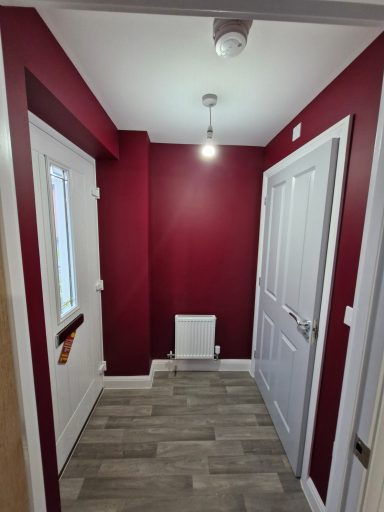
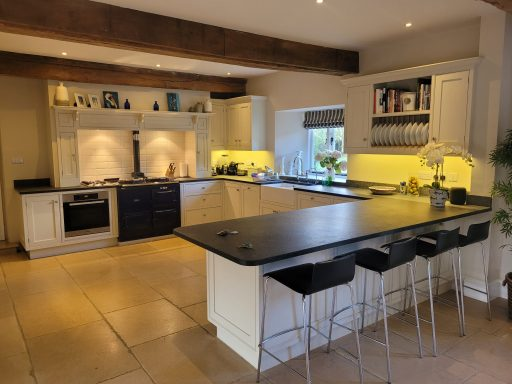
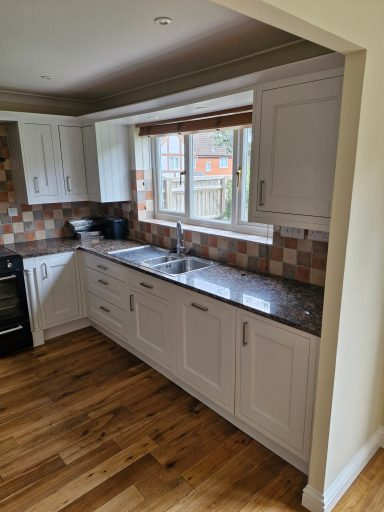
Working with Cheltenham homes on hallway colour ideas
One of the things we've learned working hallway, stairs & landing painting jobs in Cheltenham: Edwardian bay-window terraces reacts differently to modern paints than newer-build construction does. We adjust our specification accordingly — often using breathable systems where appropriate.
Cheltenham sits within GL1, GL2, GL3, and the Severn Vale brings persistent westerly weather and high humidity, while Cotswold edge properties face exposed elevations. That climate is the main reason we always specify the right primer system here — particularly on jobs that involve Regency stucco crazing on Cheltenham terraces that needs flexible elastomeric coatings.
Where we work near you. Cheltenham is ringed by M5 junctions 10 and 11 with the A40 running east into the Cotswolds. Travel is already priced into the figures above rather than added at the end.
Specific issues we encounter often in Cheltenham include Regency stucco crazing on Cheltenham terraces that needs flexible elastomeric coatings, magnolia-over-magnolia interiors in 1980s Gloucester estates, and Victorian villa staircase woodwork in Pittville and Tivoli. Each one has its own correct response, and lumping them together under "preparation" doesn't do justice to how much the right approach extends the life of a hallway, stairs & landing painting finish. Our quotes itemise this work so you can see exactly what's being done and why.
For Cheltenham hallway, stairs & landing painting customers asking what's typical for the area: jobs around Gloucester Cathedral skew towards heritage colour palettes and breathable products, while modern estates within GL2 are often more about contemporary neutrals on plasterboard and MDF. Both are equally valid — they just need different specifications, and we quote each on its own terms.
One pattern we see consistently across GL1 and GL52 is Regency stucco crazing on Cheltenham terraces that needs flexible elastomeric coatings. It's not always obvious from the street, but it shows up almost immediately during a proper survey. Treating it correctly takes longer than ignoring it, but the hallway, stairs & landing painting finish that goes on top will outlast a quick-cover job by years rather than months.
Read the room first, then pick the colour
It is a circulation space, which means bags, bikes, shoes and shoulders against the walls all year. Hallways often have no window at all, or one small pane of glass, so they are lit by borrowed light from the rooms off them.
Because the space is transitional, the colour needs to sit comfortably beside every room that opens off it. A hallway colour is chosen against doorways, not in isolation. Get that right and the specific colour name matters far less than people expect.
Rental stock wants a scheme that photographs well, hides scuffs, and can be patched in three years without a full repaint. That means a mid-tone durable matt, not a bespoke bold colour you can never match again.
Montpellier and Lansdown Regency properties reward Farrow & Ball or Little Greene heritage palettes; Charlton Kings 1930s semis take modern schemes well; Prestbury cottages suit deep, saturated colours.
Cheltenham's Cotswold-edge position gives strong afternoon light in west-facing rooms — colours like Cornforth White and Slaked Lime hold their warmth here where they'd read grey elsewhere.
Sample beside an open door to a room you are keeping as it is, that junction is where a wrong colour shows.
The palette, and why these five
Because the space is transitional, the colour needs to sit comfortably beside every room that opens off it. A hallway colour is chosen against doorways, not in isolation.
The bit colour charts never tell you
Brilliant white in a dark hall does not brighten it, it goes grey. A warm off-white or a deliberately deeper tone almost always looks better.
- •Warm mid-tones rather than white. White shows every scuff and reads dingy in artificial light.
- •A scrubbable matt on walls with eggshell on the dado, skirtings and spindles.
- •Painting spindles and the stair underside in the wall colour, which makes the space feel taller.
- •Committing to a deep colour where there is almost no natural light.
- •Flat matt in a hallway, which burnishes as soon as it is wiped.
- •Brilliant white walls with a busy runner and six white doors.
- •Gloss handrails, which show every fingerprint.
- •Magnolia over beige with a dado rail.
- •Grey walls, white gloss and a mirrored console.
- •Textured or Artex hallway walls left as a feature.
Questions we get asked about this
Are dark hallways a bad idea?
No — deep colours embrace the low light instead of fighting it. A well-lit dark hall reads as intentional and warm, not dingy.
Should hallway walls match the living room?
Not necessarily — flowing tones (same tonal family, slightly different depth) works better than exact matches. Different colours are fine if the trim ties them together.
How much to paint a hallway, stairs, and landing?
£850-£1,600 depending on staircase complexity, ceiling height, and number of doors and spindles.
What do people most often regret?
Brilliant white in a dark hall does not brighten it, it goes grey. A warm off-white or a deliberately deeper tone almost always looks better.
Does the direction the room faces really matter?
Hallways often have no window at all, or one small pane of glass, so they are lit by borrowed light from the rooms off them. It changes which undertone works, more than it changes which colour family works.
Should the woodwork match the walls?
In this room, it depends on whether you want the architecture to stand forward or recede; matching plays it down, contrasting picks it out.
How many coats will it need?
Two over a sound, previously painted surface in a similar tone. Three if you are going significantly darker or lighter, or covering contract emulsion.
Where most people go wrong
Brilliant white in a dark hall does not brighten it, it goes grey. A warm off-white or a deliberately deeper tone almost always looks better. Because the space is transitional, the colour needs to sit comfortably beside every room that opens off it. A hallway colour is chosen against doorways, not in isolation.
No big decisions today. A 15-minute call lays out what's involved, what to budget, and what a sensible scope looks like for your property. That's it.
Hallway Colour Ideas in nearby towns
More Cheltenham colour guides
- Popular Paint Colours in 2026 in Cheltenham
- Living Room Painting Ideas in Cheltenham
- Little Greene Colours in Cheltenham
- Feature Wall Ideas, and When a Feature Wall Works in Cheltenham
Ready to book? See our hallway, stairs & landing painting in Cheltenham page for quotes and typical prices.
Book a free colour consultation in Cheltenham
We'll bring the full deck to your home, sample large cards on the actual walls, and give you a fixed quote — no obligation.