Commercial premises · Oxford City Council
Living Room Painting Ideas in Oxford
Oxford's period stock — Jericho's Victorian terraces, Summertown Edwardians, and the Cotswold-stone streets around Iffley — sets a different colour brief to almost anywhere else we work. Heritage tones and breathable paints matter here more than in newer towns.
Living rooms have to work in both bright daylight and warm lamplight, which is why our most-repeated recommendation is a warm neutral on walls with woodwork picked out in a tone or two darker. It photographs well, ages well, and never dates.
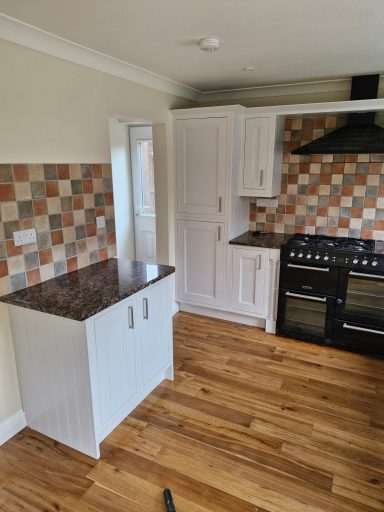
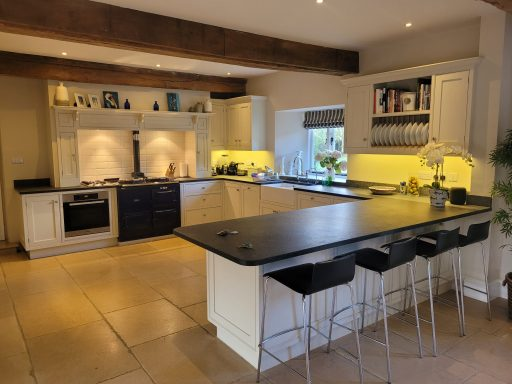
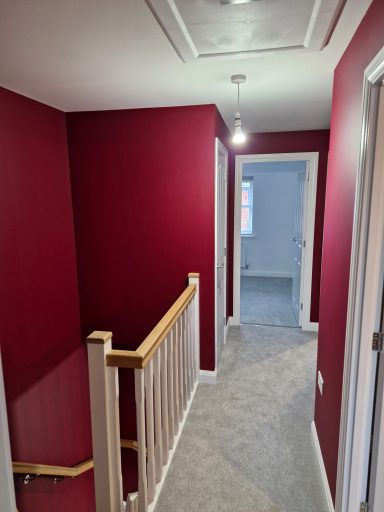
The same colour in three different houses
If this is a working building, not a home
Commercial colour has to survive trolleys, chairs and cleaning chemicals. Scuff-resistant finishes in the traffic zones and a softer palette in client-facing areas is the split that actually works.
If you live here and have to look at it every day
Owner-occupiers can afford to be braver with colour than landlords, because you are the only person who has to love it. The trade-off is that you also live with the mistakes, so sample properly before committing a whole room.
Working with Oxford homes on living room painting ideas
Within the OX1, OX2, OX3 postcode area, the projects we quote most often involve new-build snagging touch-ups in Barton Park and Mosaic developments. Oxford's clay subsoil contributes to seasonal movement that opens up hairline cracks in plaster, so flexible fillers and mist coats matter here, which directly informs the products we recommend for Oxford living room painting work.
Local context matters: Oxford's clay subsoil contributes to seasonal movement that opens up hairline cracks in plaster, so flexible fillers and mist coats matter here. For Oxford living room painting jobs — particularly those involving new-build snagging touch-ups in Barton Park and Mosaic developments — that affects when we work, what products we use, and how we sequence the prep.
Where we work near you. We are inside Oxford City Council regularly. It sits between Kidlington (about 5 miles N), Abingdon (about 7 miles S), Witney (about 12 miles W) and Bicester (about 12 miles NE).
Oxford's clay subsoil contributes to seasonal movement that opens up hairline cracks in plaster, so flexible fillers and mist coats matter here. For Oxford living room painting customers that has practical consequences: the timing window for exterior work is tighter than people often assume, and interior rooms on north-facing elevations within the OX1 and OX26 areas are noticeably more prone to condensation. We factor both into the products and additives we recommend during the quote stage.
Local material reality matters: modern eco-build cassette construction dominates parts of Oxford that newer build does not, and the local climate adds its own demands. Oxford's clay subsoil contributes to seasonal movement that opens up hairline cracks in plaster, so flexible fillers and mist coats matter here. Combined, this means our living room painting specifications for properties around the Oxford colleges will often differ noticeably from those a few postcodes away — and rightly so, given how differently those properties behave over a ten-year horizon.
Within OX1 alone we've handled everything from Edwardian villa hallway and staircase repaints in North Oxford and Summertown through to rental-flat turnaround repaints in Cowley and Headington, and the postcode boundary running through Oxford means properties on the OX29 side often present slightly different issues again. Most living room painting jobs in the area touch on at least one of these patterns, which is why we always survey thoroughly before quoting — generic per-room pricing rarely matches what an Oxford property actually needs.
Read the room first, then pick the colour
Before any colour name comes up, one thing decides most of it. Living rooms are used most in the evening under warm artificial light, so a colour chosen at 11am on a Saturday often reads completely differently when you actually sit in it.
It is the room that has to work for television, guests and daylight reading, which is three different lighting states in one space. Mid-depth colours hold up best here. Very pale walls wash out under lamps, very dark walls swallow the little evening light there is unless you have layered lighting to compensate.
The common regret is choosing a cool grey from a chart in a bright showroom and finding it reads blue and cold at night. Commercial colour has to survive trolleys, chairs and cleaning chemicals. Scuff-resistant finishes in the traffic zones and a softer palette in client-facing areas is the split that actually works.
Jericho's high-ceilinged terraces reward Farrow & Ball's deeper palette; Summertown's Edwardian semis need warm neutrals to keep character; college-adjacent flats often carry listing restrictions requiring breathable finishes.
Oxford's low, diffuse river-valley light means warm palettes read truer here than in higher, brighter towns — cool greys often disappoint on-site.
Paint an A2 card, prop it against the wall you actually look at from the sofa, and judge it after dark with the lamps on.
How we would actually paint it
Matt emulsion on walls, eggshell on skirtings and architrave, and a slightly warmer white on the ceiling. Panelled or chimney-breast walls take deep colour brilliantly — that's where we spec Inchyra Blue or Salon Drab.
Finish. Matt on walls, because the large flat planes show every roller mark in anything with sheen, and eggshell on the woodwork so it survives feet and hoover heads.
In kitchens and bathrooms we move to a moisture-tolerant finish with a mould inhibitor rather than relying on the standard emulsion to cope with steam.
Paint your ceiling one shade warmer than 'brilliant white' (try F&B Wimborne White or Little Greene Slaked Lime Mid) — modern LED bulbs read cool, and a warm ceiling balances that.
Skimming Stone walls with Card Room Green panelling and warm brass fittings — a scheme we've delivered dozens of times and never had a client dislike.
Straight answers on what to avoid
The common regret is choosing a cool grey from a chart in a bright showroom and finding it reads blue and cold at night.
- •A warm neutral on the walls with woodwork a tone or two deeper. It works in daylight and in lamplight, which no other living room scheme reliably does.
- •Putting the depth on the chimney breast, the alcoves or panelling rather than on a random flat wall.
- •Choosing by orientation: warm neutrals in a north facing living room, cooler slate and sage tones in a bright south facing one.
- •Sampling large cards against the sofa and the flooring, since those two surfaces dominate the room.
- •One bright contrasting wall in an otherwise neutral room. It is the decision people ask us to undo most.
- •Cool grey walls above orange-toned oak or pine flooring, which makes the floor look brighter orange.
- •Silk emulsion chosen for wipeability, which shows every roller mark on a long sunlit wall.
- •Brilliant white ceilings, which read cold against warm bulbs.
- •Grey walls, white gloss trim and chrome switches.
- •A single teal or plum feature wall with magnolia elsewhere.
- •Silk emulsion and sponged effects.
The palette, and why these five
Mid-depth colours hold up best here. Very pale walls wash out under lamps, very dark walls swallow the little evening light there is unless you have layered lighting to compensate.
Not ready for a quote? Have the advice anyway
Send a photo of the room and what is staying in it. We will tell you what we would put on the walls, no obligation attached.
Common questions before people commit
Should living room walls all be the same colour?
Generally yes — 'feature walls' in a contrasting colour date fast. Instead, add depth with panelling, alcove colours, or a darker chimney breast in the same tonal family.
What ceiling colour works best?
A warm white 25% lighter than the wall colour. Never brilliant white — it looks stark under warm lighting.
How long does living room painting take?
2-3 days for a standard living room with woodwork — allow an extra day for panelling or built-in shelving.
How many coats will it need?
Two over a sound, previously painted surface in a similar tone. Three if you are going significantly darker or lighter, or covering contract emulsion.
Can you work outside business hours?
Yes. Evening, overnight and weekend starts are all normal for us on commercial work, and we will price the access window into the quote up front.
How many samples should I test before deciding?
Two or three, no more. Paint an A2 card, prop it against the wall you actually look at from the sofa, and judge it after dark with the lamps on.
Which finish should I use in here?
Matt on walls, because the large flat planes show every roller mark in anything with sheen, and eggshell on the woodwork so it survives feet and hoover heads.
If you only remember one thing
The common regret is choosing a cool grey from a chart in a bright showroom and finding it reads blue and cold at night. Paint an A2 card, prop it against the wall you actually look at from the sofa, and judge it after dark with the lamps on.
Tell us roughly when you want the work done and we'll hold a provisional slot for a week while you decide. No deposit, no commitment, no chasing emails.
Living Room Painting Ideas in nearby towns
More Oxford colour guides
- Hallway Colour Ideas in Oxford
- Period Property Colours in Oxford
- South Facing Room Colours in Oxford
- Dulux Heritage Colours in Oxford
Ready to book? See our living room painting in Oxford page for quotes and typical prices.
Book a free colour consultation in Oxford
We'll bring the full deck to your home, sample large cards on the actual walls, and give you a fixed quote — no obligation.