Period Property Colours in Swindon
Swindon's mix of Victorian railway terraces in Old Town, 1930s semis around Park North, and thousands of new-build estates in Wichelstowe and Tadpole Garden Village means every colour scheme decision depends on which era of house you're standing in.
Georgian, Victorian, and Edwardian houses were designed for specific paint palettes — historic pigments were expensive, so period schemes tend to be tonal rather than contrasting. Getting this right respects the architecture and adds real value at resale.
How the light in this room changes the answer
Light is the variable people underestimate: the same tin behaves differently on every aspect and at every time of day. That is the starting point for this whole page.
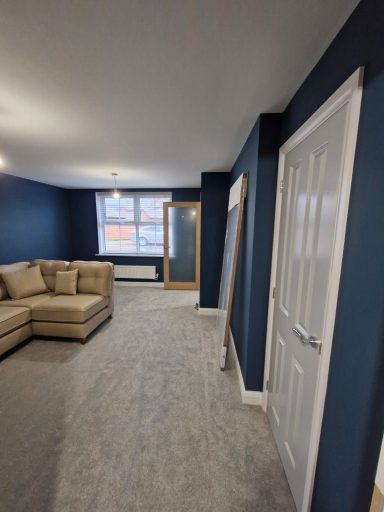
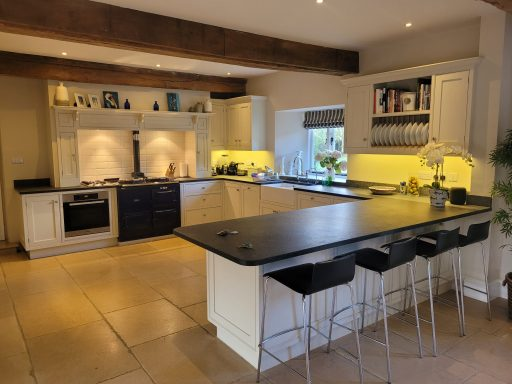
Start from the things you are not changing, the flooring, the worktop, the sofa, and choose paint around them rather than the other way round. Get that right and the specific colour name matters far less than people expect.
Owner-occupiers can afford to be braver with colour than landlords, because you are the only person who has to love it. The trade-off is that you also live with the mistakes, so sample properly before committing a whole room. Two large sample cards, two different walls, judged in daylight and after dark.
Old Town's tall Victorian ceilings drink deep colours beautifully; the 1930s semis in Park North have modest ceiling heights that need warmer, lighter tones; Wichelstowe new builds need proper prep before any decorative paint holds up.
Swindon sits on higher ground with strong east-west light — north-facing rooms in the terraces off Cricklade Road benefit noticeably from warmer palettes.
Two large sample cards, two different walls, judged in daylight and after dark.
What the housing stock around here does to the brief
If you live here and have to look at it every day
Owner-occupiers can afford to be braver with colour than landlords, because you are the only person who has to love it. The trade-off is that you also live with the mistakes, so sample properly before committing a whole room.
If this is a working building, not a home
Commercial colour has to survive trolleys, chairs and cleaning chemicals. Scuff-resistant finishes in the traffic zones and a softer palette in client-facing areas is the split that actually works.
The palette, and why these five
Start from the things you are not changing, the flooring, the worktop, the sofa, and choose paint around them rather than the other way round.
Borrow our opinion, keep your decision
We look at rooms like this most weeks around Swindon. Tell us what you are torn between and we will say which one we would pick and why.
Finish, prep and the practical bits
Historic properties reward tonal woodwork — skirtings and architrave in the same colour as walls, one shade lighter or darker, never brilliant white. Ceilings in a warm off-white, panelling picked out in a deeper shade of the wall colour.
Finish. Match the sheen to the traffic: flat matt where nothing touches, washable matt or eggshell where things do.
Ceilings get a genuinely flat matt with no sheen at all, because ceiling light is raking light and anything reflective picks out every joint.
Match the picture rail colour to the wall colour above the rail (usually a lighter neutral), not the wall below. It preserves the proportions of the room the way the architect intended.
Book Room Red dining room with Setting Plaster hallway; Hague Blue study with Sudbury Yellow adjoining reception room.
Working with Swindon homes on period property colours
Swindon period property painting customers typically have one of two starting points: a property near the centre of Swindon that's seen better days, or a recent purchase in the SN13, SN14, SN15 area that needs bringing up to standard. Our process handles both equally well.
Local context matters: Wiltshire's mix of chalk downland and clay vale means properties experience driving rain from the south-west and frost pockets in the valleys. For Swindon period property painting jobs — particularly those involving stone-cottage interior lime plaster patching — that affects when we work, what products we use, and how we sequence the prep.
Where we work near you. Swindon is directly on the M4 with the A419 linking north to Cirencester and the A420 east to Oxford. It sits between Royal Wootton Bassett (about 6 miles W), Highworth (about 6 miles NE), Marlborough (about 12 miles S) and Cirencester (about 17 miles N).
Drive five minutes out from the centre of Swindon and the housing stock changes character noticeably. Closer to the centre we see more traditional UK construction methods typical of Swindon; further out it shifts towards traditional UK construction methods typical of Swindon. That mix is one of the things that makes period property painting in Swindon interesting — no two streets ask for exactly the same specification, and a single quote template would do most properties a disservice.
Specific issues we encounter often in Swindon include stone-cottage interior lime plaster patching, stone-cottage interior lime plaster patching, and stone-cottage interior lime plaster patching. Each one has its own correct response, and lumping them together under "preparation" doesn't do justice to how much the right approach extends the life of a period property painting finish. Our quotes itemise this work so you can see exactly what's being done and why.
Work near the centre of Swindon tends to involve the older end of the local housing stock. Recurring themes here include stone-cottage interior lime plaster patching and the careful prep needed before any topcoat goes near traditional UK construction methods typical of Swindon. We've developed a sequence for these properties that addresses the substrate first — fillers, primers, and stabilisers chosen for the specific construction — rather than relying on the paint itself to compensate for poor preparation.
Questions we get asked about this
What paint should I use in a listed building?
For listed interiors we spec Little Greene Traditional Distemper or Farrow & Ball Estate Emulsion — both are breathable and appropriate for lime plaster.
Can I use modern colours in a period property?
Yes, but tonally. Modern greys often read cold in period rooms — swap to a warmer near-neutral like Elephant's Breath or Skimming Stone and the room comes alive.
Do I need lime paint for old walls?
Only if the walls are still lime-plastered and unpainted with modern emulsion. If they've been emulsioned in the past 40 years, modern breathable emulsion is fine.
How many samples should I test before deciding?
Two or three, no more. Two large sample cards, two different walls, judged in daylight and after dark.
Which finish should I use in here?
Match the sheen to the traffic: flat matt where nothing touches, washable matt or eggshell where things do.
What do people most often regret?
Picking from a printed chart under shop lighting is the root cause of most of the colour regrets we are asked to fix.
Does the direction the room faces really matter?
Light is the variable people underestimate: the same tin behaves differently on every aspect and at every time of day. It changes which undertone works, more than it changes which colour family works.
Pulling it together
How hard the room is used decides the finish long before the colour decides anything. Match the sheen to the traffic: flat matt where nothing touches, washable matt or eggshell where things do.
Tell us roughly when you want the work done and we'll hold a provisional slot for a week while you decide. No deposit, no commitment, no chasing emails.
Period Property Colours in nearby towns
More Swindon colour guides
- Feature Wall Ideas, and When a Feature Wall Works in Swindon
- Hall, Stairs and Landing Colour Schemes in Swindon
- Hallway Colour Ideas in Swindon
- Little Greene Colours in Swindon
Ready to book? See our period property painting in Swindon page for quotes and typical prices.
Book a free colour consultation in Swindon
We'll bring the full deck to your home, sample large cards on the actual walls, and give you a fixed quote — no obligation.